
Now, getting locked out of bedroom sounds like one of those small problems people laugh about until it happens to you, and suddenly you’re stood there looking at a door that absolutely refuses to open, no matter how many times you turn the handle. Bedroom and bathroom locks don’t behave like front doors at all, they’re lighter, they use little springs, small latches, and honestly, it doesn’t take much for something inside to shift or jam.
Call us now, we work 24 hour: 07309909989
If it’s not an emergency, just complete the form below and we will be back to you via email:
Usually, it’s one of the simple things:
someone pressed the little privacy button and didn’t realise
the tiny turn on the inside stopped sitting straight
the spindle slipped in the handle
the door closed while the lock was still engaged
All very common. All very annoying.
And yes, it happens more than you think, especially in London flats with older frames or cheap door packs.
And if it’s the bathroom door and the tap’s running, or a child is stuck inside the bedroom, then it stops being a simple inconvenience and becomes something you need sorted right now, not “in the morning”.
We deal with locked bedroom door and internal lockouts all over London, houses, flats, HMOs, rentals, student rooms, Airbnbs, loft conversions… anywhere inside your home where the door simply won’t open.
Now, while internal doors might be lighter than front doors, you should know that they fail far more often.
From small parts, to thin springs. Cheap privacy locks to older frames. And even steam from bathrooms… All of it adds up.
We see loads of internal door lockouts caused by so many little things like:
someone shut the door with the button pressed
the latch twisted itself sideways
the spindle slipped out of place
the tiny spring inside snapped
someone tried a DIY fix and overtightened everything
bathroom locks rusted a little from steam
the frame swelled from humidity
someone tried to unlock it with a coin and bent the mechanism
a housemate borrowed the key and forgot to return it
the lock just wore out from years of use
Everytime we see it, people are always surprised that something so small can jam a door so tightly, but honestly, it happens constantly.
So as professionals, we take pride in our work. This means that when we get to you, we don’t just dive in with a drill. Internal doors are delicate.
We check the basics first:
Does the handle feel loose or stiff?
Is there a release hole in the knob?
Are screws visible on the inside face?
Is the latch sitting level?
Has the mechanism twisted slightly?
Does the spindle turn, or has it slipped?
Is the latch angled so we can ease it?
Usually, once we look at all that, we can open the door without damaging anything.
Internal doors almost always respond to non-destructive work, picking, sliding, easing, the usual tricks we’ve picked up after hundreds of these jobs.
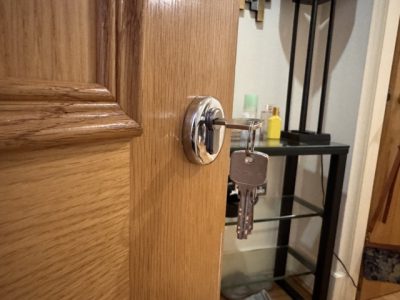
The DIY approach, we get it, people always try things first, which is understandable. Some things help. Some absolutely don’t (and actually make it a lot worse).
What sometimes works:
using a flat screwdriver on the small release hole
gently pushing the door to ease pressure
lifting the handle while easing the latch
using a paperclip or bobby pin on older push-button locks
What usually makes it worse:
forcing the handle until the spindle snaps
pushing butter knives or coins into the latch
scratching the frame with coat hangers
trying to “pop the latch” with kitchen knives
kicking the bottom of the door
Internal locks are flimsy. One wrong move and the latch twists, leaving you with a proper problem instead of a small one.
If you’re unsure, stop, it’s cheaper for us to open it than for you to replace the whole latch set.
We know that you’ve probably seen the YouTube videos that make it look SO easy…. And yes, lots of bedroom and bathroom locks have that tiny hole on the outside where, in theory, you push a pin and it pops open. But, in practice, it fails more often than it succeeds because:
the spring inside bends
a new handle was fitted and the hole no longer lines up
the latch isn’t the kind that opens like that
moisture made the lock stiff
the door has shifted slightly in the frame
So, if you’ve tried the hole and nothing happened, the mechanism is jammed or misaligned, that’s when you call us.
Well, with the amount of times we hear:
“Use a bobby pin!”
“Try a safety pin!”
“Use a straightened paperclip!”
You’d think we’d be out of a job, but, typically, these DIY methods are not reliable. While they may work on certain older models of push-button locks, more often than not then will also bend the button, causing damage to the mechanism, meaning it will just cause problems again later on.
Usually, internal locks aren’t designed for heavy use, they’re often lightweight, and are also often the sort of thing that are overlooked in a home renovation after people move homes. Often, we see London homes that have had have privacy locks installed 10+ years ago that have never been serviced. Now, if door frame shifts slightly over time, the latch bolt starts catching, and one day the door just refuses to open.
Common reasons:
Bolt stuck behind the strike plate
Spring inside the latch snapped
Humidity caused the door frame to swell
A push-button stayed engaged after the door shut
Someone turned the knob too hard and rotated the spindle
A child turned the lock from inside and closed the door
A past repair job used the wrong screws
A high security bedroom lock was fitted incorrectly
Here, it is our job is to work out the cause and release the latch without damaging the door.
Bathroom doors, like any doors, often use moisture-sensitive components. Steam expands wood. And what do bathrooms often have in them? Yep, steam, and lots of it. Cheap bathroom door locks twist over time. The handle feels fine until, poof, one day it spins freely and the latch doesn’t move at all.
We handle bathroom lockouts constantly. No forcing, no prying, no kicking the door in. Just good old-fashioned locksmith work.
Now, we know that many HMOs use standard bedroom lock systems where every room has its own key. This means, that if you’ve lost the key, broken it, or shut it inside, you need entry without upsetting the landlord or damaging the door.
We deal with:
Student accommodations
Multi-tenant flats
Sublets
Temporary rooms
Care homes
Airbnb properties
Rented houses
If needed, we can speak with the landlord or property manager.
Most HMO locks open cleanly. Drilling and forced entry are (very) rarely necessary.
So, if the internal spring snapped or the latch twisted inside the case, opening the door cleanly becomes harder. But, in most cases, it is still doable.
When a latch is:
Bent
Jammed
Worn
Wedged in the frame
Our trick? Is using controlled pressure and micro-tools to free it. If the latch is truly beyond saving, the smallest drill point releases it without harming the door frame or the door itself.
Once open, we can carry out:
Minor latch adjustments
Handle tightening
Realignment
Luckily, internal locks are inexpensive to replace, and we can install models that suit your security needs without complicating daily use.
If a toddler has pressed the button and the door won’t open, this is urgent, and our emergency locksmiths respond immediately.
In these cases, we:
Open the door using non-destructive methods
Prioritise speed
Keep the door lock intact whenever possible
No fuss, no upselling. Just safe entry.
Here, if you feel the child is in danger, you should always call the emergency services first.
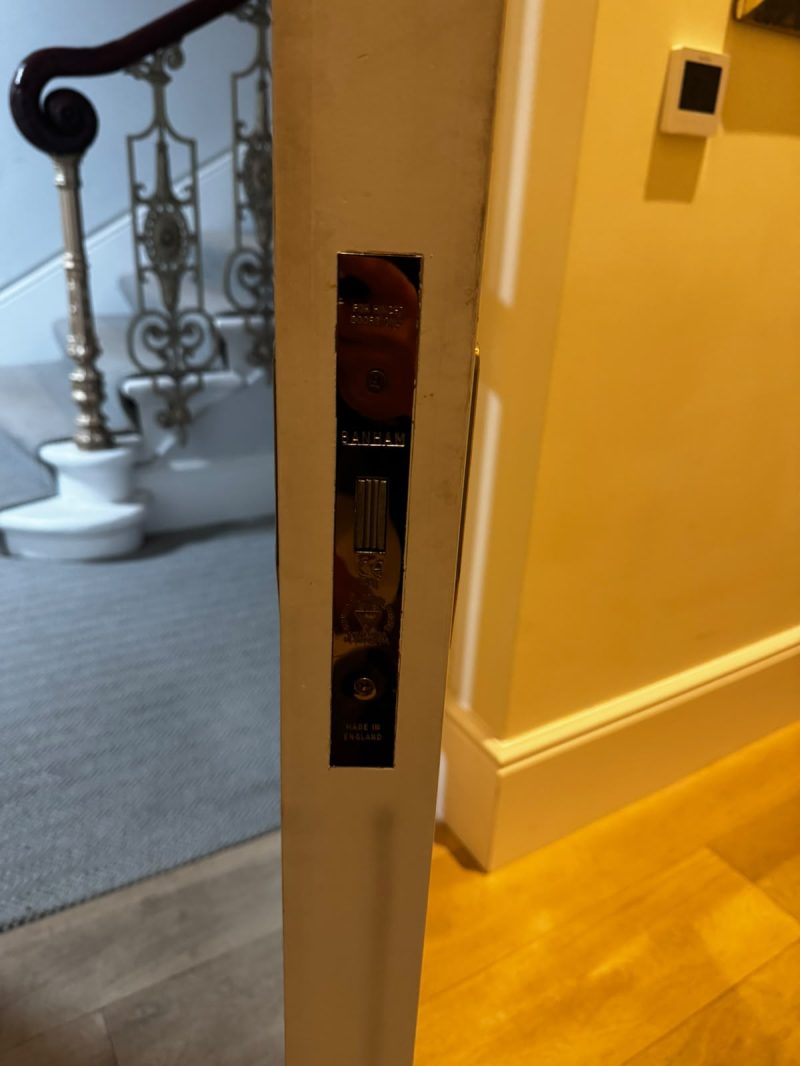
We’ve seen it all, really. We have arrived at lockouts where people have tried:
Sliding a coat hanger between the door and frame
Pushing a dining knife into the latch
Using credit cards
Twisting the handle harder until the spindle sheared
Removing the hinges from the wrong side
Trying to lift the whole door by the handle
You see, most internal locks fail in a way that makes forcing them counterproductive.
Save yourself time (and the cost of a new door) and call a professional instead.
Luckily, internal lockouts are normally cheaper than external ones because the locks are simpler. However, costs will vary based on:
Door type
Lock type
Whether the latch is stuck
If the handle has failed
Time of day
Whether latch repair or replacement is needed
We explain everything up front before starting.
In our (many) years of combined experience, one of the most annoying causes of being locked out of bedroom is when the latch hasn’t actually “broken” at all, it’s just slipped behind the door frame at an awkward angle. When this happens, it looks normal, but the latch bolt is sitting too deep in the strike plate, which means that the handle then turns without enough leverage to pull it back.
Often, we will see this a lot in older London flats where:
the timber frame has warped slightly
the door has dropped after years of use
someone repainted the frame and tightened the keep
the latch is worn and barely catching
screws in the bedroom door lock have loosened over time
In these situations, forcing the handle won’t help. In fact, it often bends the spindle or twists the latch further, making the situation worse.
Our approach? It is to ease the tension around the bolt; even a small amount of controlled pressure in the right spot usually frees the latch so it can slide back.
We always find that most people don’t realise how sensitive internal latches are. Just half a millimetre of movement in the frame can trap the latch. We deal with this every day, and once freed, the door usually opens without needing any replacement parts.
This is easily one of the most stressful failures, but also one the easiest to fix. It is, of course, when the handle turns freely and nothing happens. Inside the handle is a square spindle that passes through the latch. If it snaps or strips, the bedroom door won’t open no matter how much you twist.
We deal with spindle failures by:
checking which side has the broken piece
using a fine tool to pull the latch back manually
removing enough pressure from the frame to free the bolt
avoiding damage to the latch case
Once inside, we replace the spindle and tighten everything so it doesn’t happen again.
If your handle felt “soft” before this happened, it was warning you, and it’s one of the most common lock problems we see in London homes.
Many assume internal doors are easy to bypass. Some are, but not all.
Depending on the property, you might have:
reinforced privacy locks
home office security turns
spring-loaded latches
bedroom locks with strong return springs
bathroom locks with corrosion from steam
latch bolts with angled faces that resist manipulation
So, even if the lock looks basic, it may not open with simple tools. This is where a steady hand and proper technique matter.
We aim to open the door without damaging anything, which includes:
the latch
the door frame
the handle
the spindle
the strike plate
Once open, we check the alignment so you don’t end up in the exact same situation next week.
Now, if you’re locked out of bedroom or bathroom, or any internal door in the house, we can come out, take a look, and open it cleanly. We do this all across Central London, day and night, and we carry all the tools for different internal locks.
You don’t need to try coat hangers, butter knives, safety pins, bobby pibs, paperclips or whatever you’ve seen online; those tricks usually make it worse.
Just call, tell us what the door is doing, and we’ll head over. Whether you’re accidentally locked out or have a broken locking mechanism on the bedroom door lock,
Most internal doors open in minutes once we’re there.
What you can expect:
fast response
clean work
no damage
honest advice
replacement only if needed
no upselling
DBS-checked locksmiths
And that we will unlock the door!
Oh, and we also deal with window locks and external smart locks if your bedroom doors are super secure!
If you need access now, we’re ready.
Just give us a call, and we’ll get the room open. We’re expert bedroom door lock issue resolvers for a reason.
Don’t force the handle or try knives and coat hangers. Just call and we’ll open the locked bedroom door safely.
Most internal doors, including bedroom doors, open without any damage. We release the door lock using light, precise methods.
That usually means the latch isn’t retracting. We free the mechanism and open the bedroom door without harming the frame.
Sometimes, but not reliably. You might twist the spring. If it doesn’t open quickly, it’s better to call a professional.
Many privacy locks use a push-button or a small hole. If the release doesn’t work, the mechanism is jammed. We can open it cleanly.
Yes. Locked out of bathroom calls are common, especially with moisture-damaged locks.